
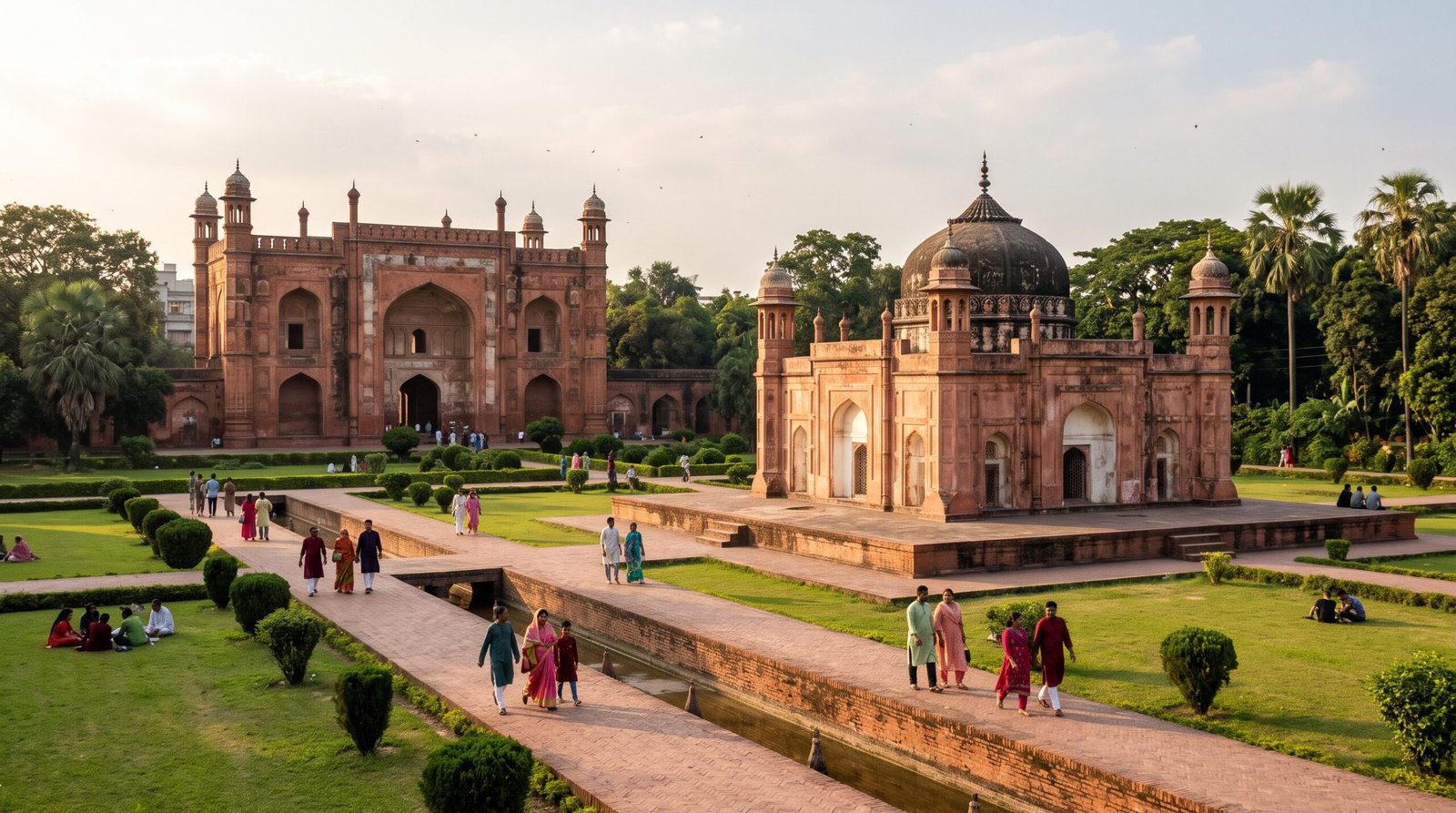
Standing as a silent witness to the grandeur and tragedy of the Mughal era in Bengal, Lalbagh Fort remains one of the most iconic historical landmarks in Dhaka. Originally known as Fort Aurangabad, this sprawling complex along the banks of the Buriganga River is a poignant reminder of imperial ambitions that were never fully realized. At the heart of this unfinished fortress lies the exquisite mausoleum of Pari Bibi, a monument of love and sorrow that continues to captivate historians, architects, and visitors alike.
The Origins of an Incomplete Dream
The construction of Lalbagh Fort was initiated in the late seventeenth century by Prince Muhammad Azam, the third son of the Mughal Emperor Aurangzeb. During his brief tenure as the viceroy of Bengal, the prince envisioned a magnificent riverfront fortress that would serve as the palatial residence and the administrative center of the province. However, before the ambitious project could be completed, Emperor Aurangzeb recalled him to Delhi to assist in the empire’s ongoing military campaigns. The monumental task of finishing the fort was then handed over to the succeeding governor, the legendary Shaista Khan, who was also the maternal uncle of Emperor Aurangzeb.
The Tragedy of Pari Bibi
Under Shaista Khan’s administration, the construction of the fort continued steadily, but it was soon abruptly halted by a devastating personal tragedy. Shaista Khan’s beloved daughter, Iran Dukht, affectionately known as Pari Bibi or the Fairy Lady, died suddenly within the fort premises. She was reportedly betrothed to Prince Azam, tying her intimately to the fort’s original founder. Heartbroken by her untimely demise, Shaista Khan considered the fort to be highly ominous and cursed. Overwhelmed by grief, he immediately suspended all construction work on the fortress walls and administrative quarters, leaving the ambitious architectural project forever incomplete.
The Architectural Marvel of Pari Bibi’s Mausoleum
Instead of completing the military structures, Shaista Khan channeled his resources and sorrow into building a magnificent resting place for his daughter right in the center of the fort’s grounds. The mausoleum of Pari Bibi is an architectural anomaly in Bengal and remains the only historical building in the region crafted entirely with such luxurious imported stones. The structure is heavily adorned with white marble brought from Rajputana, black basalt shipped from Rajmahal, and intricately glazed encaustic tiles. The interior layout features a central square chamber housing her cenotaph, surrounded by eight smaller rooms, all capped by an elegant, stepped dome that originally glimmered with a coating of pure gold leaf.
A Lasting Legacy in Modern Dhaka
Today, Lalbagh Fort functions as a beautifully maintained archaeological garden, offering a peaceful green sanctuary amidst the densely packed and bustling streets of Old Dhaka. While the imposing fort walls, the grand southern gate, the three-domed mosque, and the Diwan-i-Aam showcase the classic elements of imperial Mughal architecture, it is the tomb of Pari Bibi that remains the undisputed centerpiece. Her resting place not only anchors the geometry of the fort’s exquisite Mughal gardens but also stands as an enduring symbol of a father’s profound love, gracefully preserving a poignant chapter of Bangladesh’s rich heritage for future generations.