
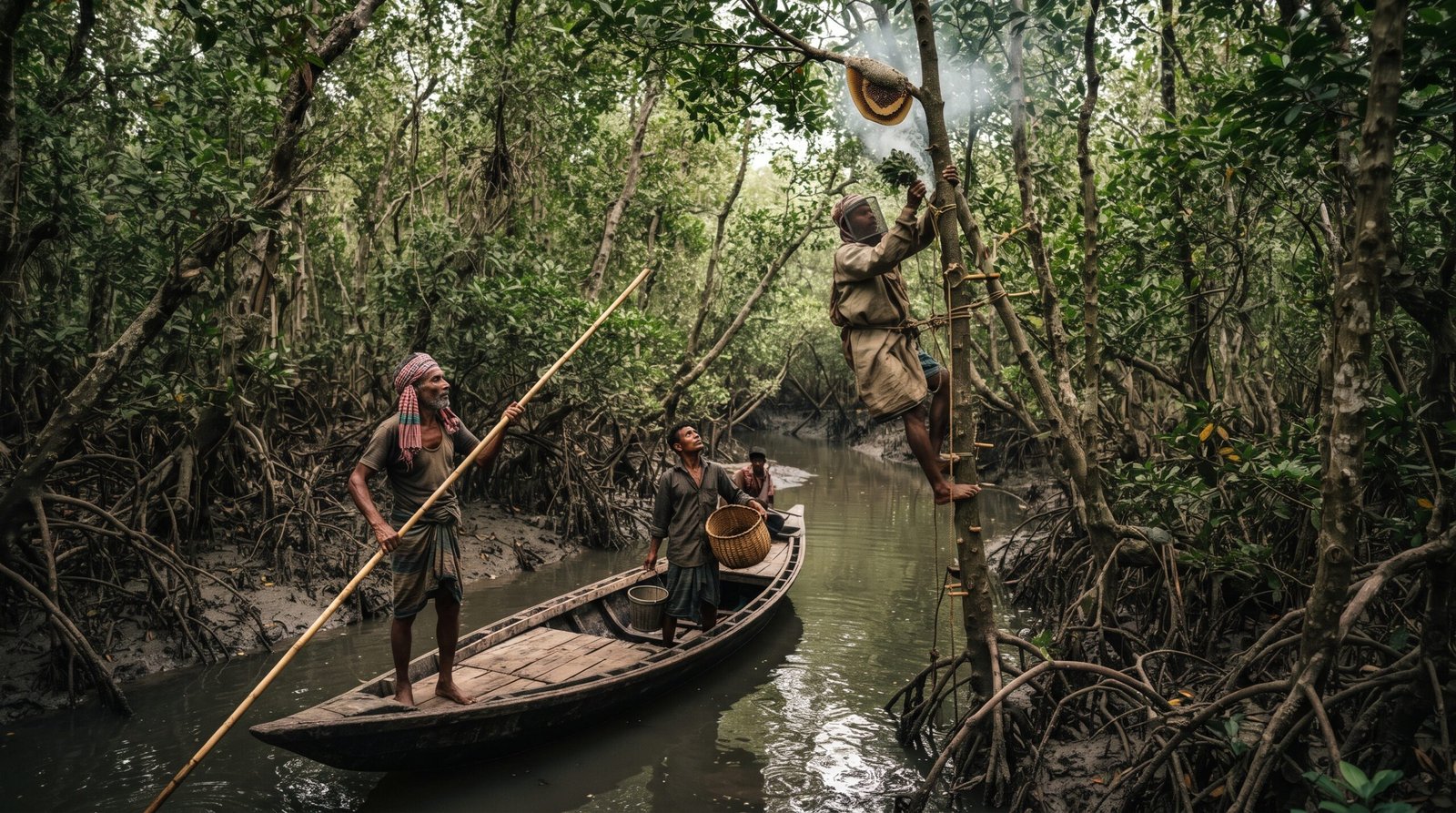
Few professions in the world demand as much courage, spiritual reverence, and ecological intimacy as harvesting wild honey inside the Sundarbans. Spanning the vast estuarine delta where the Ganges, Brahmaputra, and Meghna rivers meet the Bay of Bengal, this tidal mangrove forest is home to the Royal Bengal Tiger, venomous snakes, saltwater crocodiles, and shifting waterways. Every spring, as flowers bloom across the mangrove canopy, traditional honey gatherers known as Mawalis set sail into the wilderness on narrow wooden boats. For Heritages of Bangladesh, their story represents one of the most resilient and endangered living traditions of the delta.
The Roots of a Perilous Calling
The tradition of honey gathering in the Sundarbans stretches back for centuries, shaped by the rhythm of the tides and the seasonal flowering of mangrove trees such as khalshi, baen, kewa, and goran. Historically, forest communities living along the fringes of the Sundarbans in districts like Khulna, Satkhira, and Bagerhat developed specialized skills to navigate dense tidal creeks and locate wild honeycombs suspended high in tree branches or tucked into hollow trunks.
Unlike conventional beekeeping, which relies on domesticated hives and stationary apiaries, Mawalis enter a wild ecosystem where human beings are not at the top of the food chain. Over generations, knowledge of weather shifts, tiger pugmarks, water salinity, and bee behavior has been passed down orally from elders to younger men, turning survival in the mangrove labyrinth into an inherited art.
Rituals, Faith, and Survival in the Forest
Before a Mawali steps foot inside the forest boundary, preparation begins with faith and collective discipline. Because danger is an ever-present reality in the Sundarbans, honey collectors observe deep-rooted spiritual rituals to seek protection and blessings. Prayers and offerings are traditionally made to Bonbibi, the revered folk deity believed to guard forest dwellers from harm alongside Gazi Pir and Dakshin Rai.
Once inside the forest, Mawalis travel in small groups, sharing cramped wooden noukas that serve as both transport and shelter during multi-week expeditions. Locating a hive requires sharp eyes for returning bees and deep familiarity with the forest floor. To smoke out the bees without harming the comb excessively, collectors use smoldering bundles of damp leaves or dried wood, working swiftly and quietly while keeping constant watch over their surroundings. Every movement is governed by unwritten rules of respect for the forest, as hubris or carelessness can prove fatal in such terrain.
Changing Tides and Modern Challenges
Today, the livelihood of the Mawalis faces mounting pressures from both environmental shifts and economic realities. Rising salinity, erratic weather patterns, cyclones, and changes in mangrove ecology alter flowering cycles and make forest conditions less predictable. At the same time, strict forest department permits, seasonal windows, and competition from commercial or adulterated honey markets test how viable the trade remains for younger generations.
Many traditional families find themselves weighing the pride of an ancestral calling against the harsh financial risks and physical toll of the job. Yet despite these obstacles, raw Sundarbans honey—prized for its distinct floral aroma, thick texture, and medicinal reputation—continues to draw demand from buyers across Bangladesh who value authentic, wild-harvested forest produce.
Preserving a Living Heritage of the Delta
The Mawalis of the Sundarbans embody a rare bond between human endurance and untamed nature. Their journey is more than a seasonal harvest; it is an annual dialogue with one of the planet’s most extraordinary mangrove ecosystems. Recording their customs, songs, survival wisdom, and everyday realities ensures that the courage of Bangladesh’s honey collectors remains honored as a vital part of the nation’s cultural heritage.