
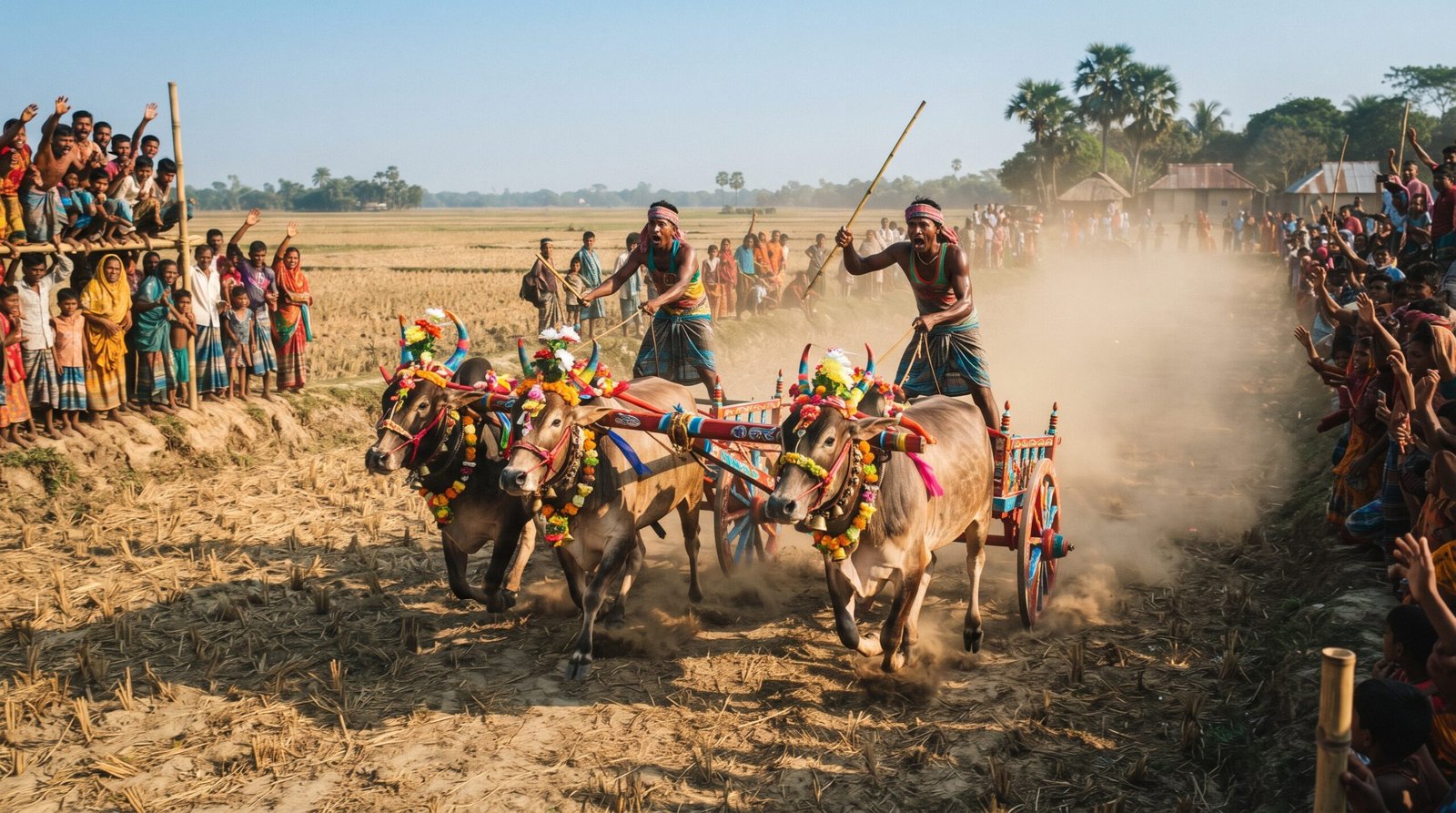
Across the flat, sun-baked plains and harvested fields of rural Bangladesh, few spectacles match the raw adrenaline, dust, and communal roar of Gurur Gari Dour—the traditional bullock cart race. Long before motorized vehicles roared down rural roads or digital entertainment occupied village evenings, bullocks were the engines of agrarian life, and racing them was a vibrant expression of rural pride, strength, and festivity. For Heritages of Bangladesh, exploring Gurur Gari Dour reveals a rich folk sporting tradition born directly out of farming culture, where everyday work animals transformed into celebrated village champions.
Roots in Agrarian Life and Rural Festivity
The origins of bullock cart racing in Bengal are inseparable from the agricultural economy and seasonal calendar of the delta. For centuries, bullocks and carts were indispensable for hauling harvested paddy, jute, sugarcane, and market goods across muddy tracks and dusty trails. Because strong, well-fed, and swift bullocks were vital assets to farming households and local landowners, villages naturally began testing whose animals were the fastest and most enduring.
Over time, these informal trials of speed and stamina evolved into organized public races held during major rural occasions such as Pohela Boishakh, harvest celebrations, Baishakhi or regional melas (fairs), and local religious or cultural gatherings. Vast stretches of fallow agricultural fields, dry riverbeds, or wide rural tracks were cleared to serve as makeshift racecourses, turning ordinary farmland into arenas of collective excitement.
Preparing the Bulls and Decorating the Carts
A true Gurur Gari Dour is never just a spontaneous dash; it involves weeks or even months of careful preparation, conditioning, and visual flair. Owners select sturdy, agile bullocks with strong shoulders and high endurance, feeding them nutritious diets of oilcake, husk, pulses, green fodder, and special local tonics to build muscle and stamina. Handlers spend time training the animals to respond to voice commands, tugs on the nose rope, and gentle cues so they stay focused amid cheering crowds and rising dust.
Equally eye-catching is the transformation of the utilitarian cart into a festive racing vehicle. Racing carts are typically lighter and sturdier than heavy cargo carts, built to withstand high speeds, sharp turns, and rough terrain without breaking apart. Owners adorn the bullocks and carts with bright cloth ribbons, painted wooden details, brass or metal bells that jingle rhythmically as they gallop, and decorative plumes or tassels around the horns and neck. The visual contrast between earthy dust, gleaming coats, and vibrant folk colors gives the race its unmistakable festive character.
The Thrill of the Race and Crowd Atmosphere
When race day arrives, entire villages and neighboring settlements gather along the edges of the field, climbing onto high embankments, rooftops, or tree branches for a clear view. The atmosphere is electric—filled with drumbeats, folk songs, vendor stalls selling snacks and toys, and loud chants urging favorite teams onward.
Each heat sends bullocks and their drivers—often experienced farmers or skilled cart-racers riding or standing precariously on the cart—hurtling down the track in clouds of kicked-up soil. Speed, balance, control over skittish animals, and navigating uneven ground all determine the winner. A sudden swerve, a broken axle, or a surge in the final stretch can turn the crowd into a roar of gasps and cheers, making every run unpredictable and thrilling.
Regional Traditions and Fading Footsteps
While bullock cart races have historically appeared across different parts of Bangladesh—including northern, central, and southwestern districts where open fields and rural fairs thrive—the tradition has steadily declined in modern decades. Mechanization in agriculture, the spread of power tillers, tractors, and paved roads, and shrinking open pasturelands have reduced everyday reliance on bullock carts. As fewer young people grow up working with draft cattle or learning the craft of racing carts, fewer villages stage regular Gurur Gari Dour events.
Even so, pockets of enthusiasm survive during special fairs, cultural festivals, and community initiatives determined to keep old folk sports alive. Wherever a race still takes place, older spectators recognize the familiar rhythm of hooves and bells with deep nostalgia, while younger onlookers experience a rare glimpse of rural heritage in motion.
Preserving a Spirited Folk Heritage
Gurur Gari Dour captures a side of Bangladeshi heritage that is bold, physical, and deeply communal. It reflects a time when rural sports grew organically out of everyday tools, working animals, and shared seasonal joy. Documenting the history, preparation, and human stories behind bullock cart racing ensures that this colorful chapter of folk life is remembered not merely as a bygone pastime, but as a lively testament to the spirit of rural Bangladesh.