
Pohela Boishakh is more than just the first day of the Bengali New Year—it is a profound cultural emotion that reflects renewal, unity, and tradition. Marking the transition from the old year to the new, this day holds deep significance for Bengalis across all communities, regardless of religion or background. It is celebrated with joy, cleanliness, new attire, and the hope for prosperity in the coming year.
Historical Background
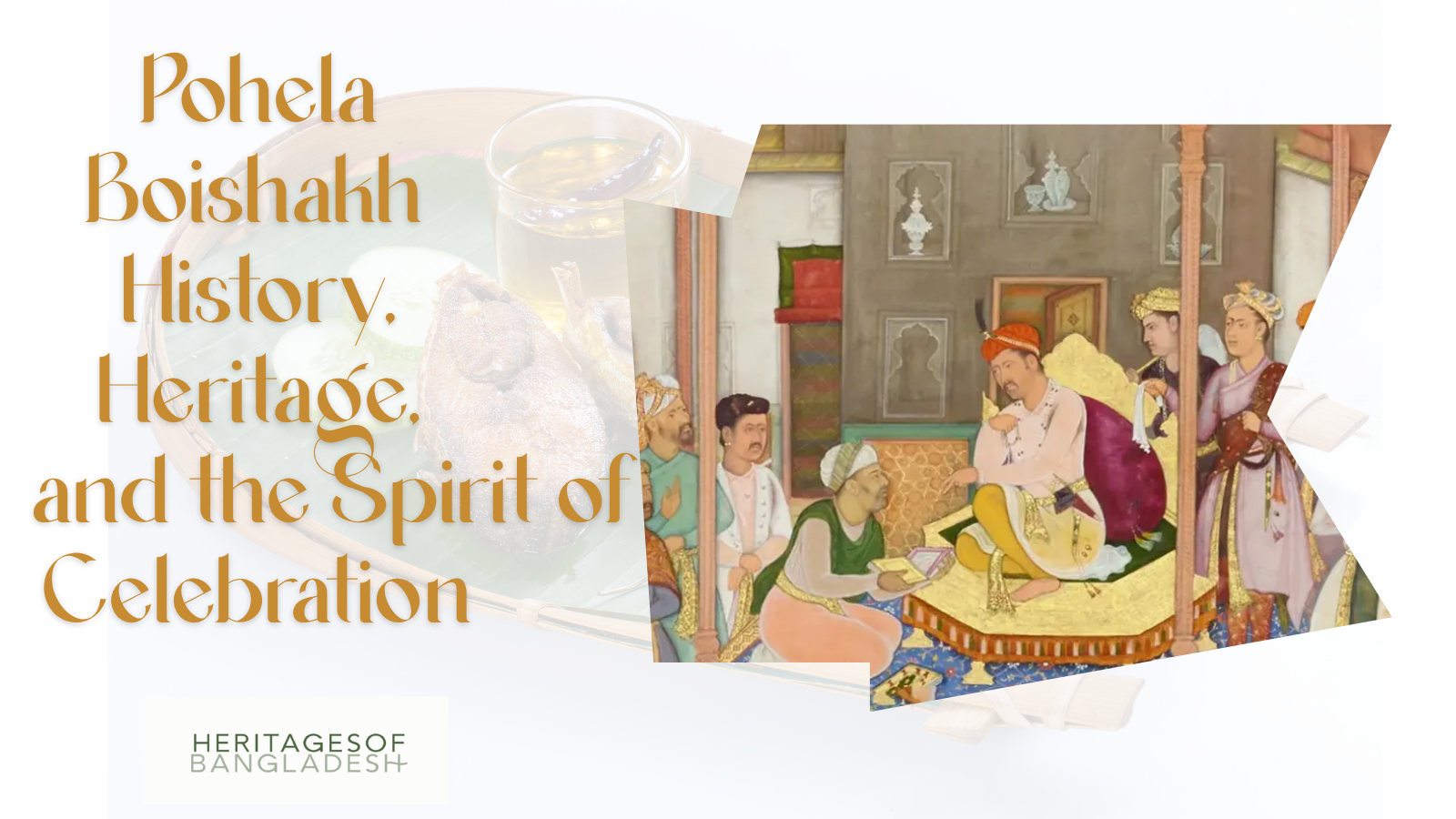
The origin of Pohela Boishakh dates back to the Mughal era under Emperor Akbar. At that time, taxes were collected based on the Islamic Hijri calendar, which did not align with the agricultural cycle. To resolve this mismatch, Akbar introduced a new calendar. With the help of astronomer Fathullah Shirazi, a hybrid calendar combining the solar system and the Hijri calendar was developed. This became the Bengali calendar, initially known as the “Fasoli San,” later renamed “Bangabda.”
Although the calendar was introduced in the 16th century, widespread celebration of Pohela Boishakh became popular much later. It gained momentum after 1967 and is now officially celebrated on April 14 each year in Bangladesh.
Traditions and Cultural Expression
The day is marked by vibrant traditions. People wear colorful attire—typically red and white—symbolizing joy and purity. Homes are cleaned and decorated, and families prepare special meals. Hospitality is a key element, with guests being served traditional foods such as sweets, rice dishes, and various local delicacies.
Mangal Shobhajatra
One of the most iconic features of the celebration is the Mangal Shobhajatra, organized by the Faculty of Fine Arts at the University of Dhaka since 1989. This grand procession showcases symbolic masks, sculptures, and motifs representing rural life and cultural heritage. It has become a national symbol of unity and cultural pride.
Celebration at Ramna Batamul
Another central event takes place at Ramna Batamul, where the cultural organization Chhayanaut hosts a musical অনুষ্ঠান at sunrise. This tradition began in 1967 as a form of cultural resistance and has since become an integral part of the New Year celebration.
Boishakhi Fairs
Boishakhi fairs are held across the country, from rural villages to urban centers. These fairs feature traditional crafts, local games, folk performances, and foods. Similar celebrations are also organized by Bengali communities abroad, turning it into a global cultural festival.
Hal Khata Tradition
The practice of “Hal Khata” is an old business custom where traders close old account books and open new ones on the first day of the year. Customers are invited and treated with sweets, symbolizing a fresh financial beginning. This tradition is still observed in many parts of Bangladesh.
Evolution of Panta-Ilish
While Panta-Ilish (fermented rice with fried hilsa fish) is now widely associated with Pohela Boishakh, it is a relatively modern addition. Historically, people focused on eating well as a symbol of prosperity. The popularization of Panta-Ilish is largely a contemporary cultural trend rather than an ancient tradition.
Celebration by Ethnic Communities
Various ethnic communities in Bangladesh celebrate the New Year in their own unique ways. In the Chittagong Hill Tracts, the festival of “Boisabi” is observed, combining traditions of different groups. Other communities, such as the Santal and Pahan, mark the occasion with rituals, dances, hunting traditions, and communal feasts, adding rich diversity to the overall celebration.